After two years with Meta Ray-Ban smart glasses, Google's Android Extended Reality glasses have convinced me to switch.
Nov 19, 2026
Google's Android XR glasses put Gemini at the center of smart glasses
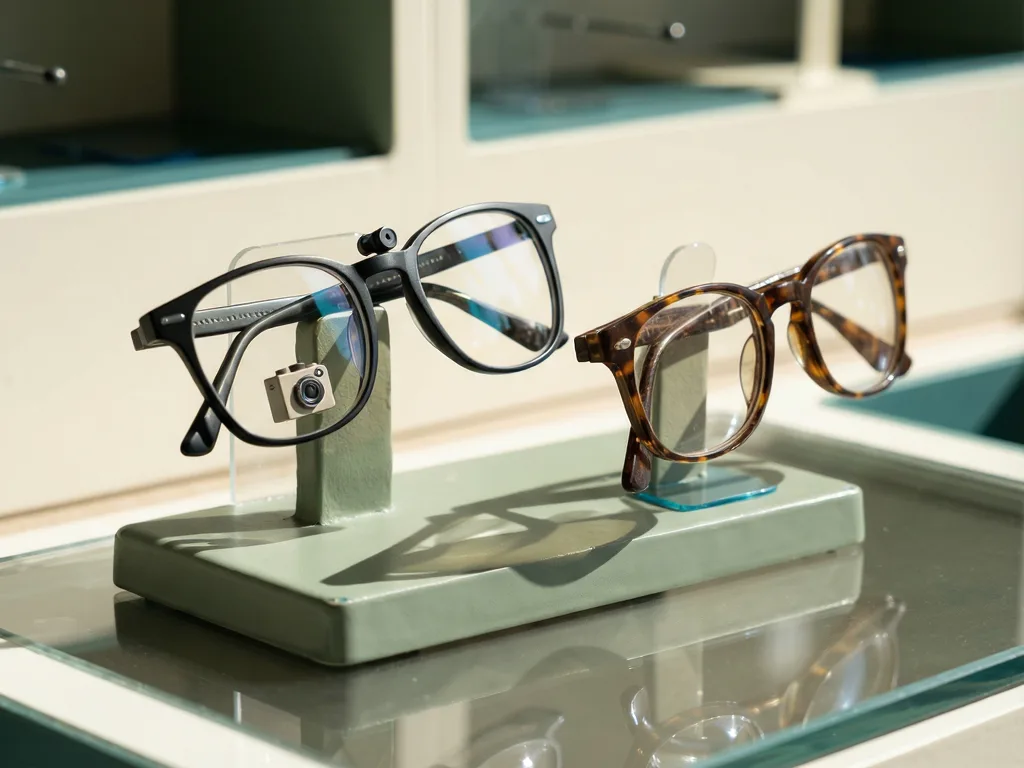
What Google announced
Google has officially unveiled its first-generation Android XR smart glasses, called the Intelligent Eyewear collection. Samsung, Gentle Monster, and Warby Parker helped develop the glasses. The announcement comes as the initial excitement around smart glasses feels like it is wearing off. Meta launched its first Ray-Ban smart glasses in 2023, and they took the market by storm. Since then, privacy concerns and questions about real usefulness have made daily wear feel less certain for some users.
The new Android XR glasses still bring some of the same concerns seen with other smart glasses. Still, they could be enough to make a user who has worn Meta Ray-Bans for more than a year consider switching. The main reason is not the camera. It is Gemini.
Why Gemini matters more than the camera
Google's first-generation Intelligent Eyewear does not have a built-in display. It keeps a familiar form factor with a 12 megapixel camera. The camera can record video at up to 3K at 30 frames per second, or 2K with high dynamic range. It also has open-ear speakers for music and calls, built-in microphones for Gemini, and a light-emitting diode indicator to let nearby people know when photos or videos are being captured.
Those features are not new on their own. The interesting change is that Google places Gemini at the center of the experience. Instead of limiting the glasses to photos, videos, calls, and music, the assistant is meant to answer questions, help with everyday tasks, and understand what the wearer is looking at. A user can ask Gemini about Gmail, use Google Maps for navigation, or ask for help with something visible in front of them. For example, someone visiting a monument could ask Gemini to identify or explain it, and someone reading a menu in another country could ask Gemini to make sense of it.
Google is emphasizing this assistant role so much that it is introducing "Hey Gemini" as the new hotword on these glasses, replacing the familiar "Hey Google" phrase used for years. The company is also bringing Gemini task automation to Android XR glasses. That could allow a user to ask the glasses to book a cab home or order coffee from a favorite restaurant, with Gemini handling the process without the user touching a phone.
That hands-off capability is something Meta Ray-Bans have not been able to offer after three generations. The gap may reflect restrictions on Android and iOS, or trust issues surrounding Meta as a company. For readers who already use Meta Ray-Bans, the contrast is useful. The experience with the built-in AI assistant was not used as much as hoped because it could be finicky. It might ask the user to open the companion app, update something, or say it could not process the request.
What Google changed about privacy
Privacy is the other area where Google appears to be trying to do better than Meta. Meta has faced criticism over the privacy implications of its Ray-Ban smart glasses in recent months. Previously, the camera recording indicator could be tampered with, although Meta later introduced measures to prevent that. The fact that tampering was possible at all raised legitimate concerns.
Google says its Android XR glasses address this from the beginning. If the indicator is tampered with, hidden, or covered, the camera automatically stops taking photos or recording video. The camera also does not work unless the wearer is using the glasses.
The handling of camera data is another key point. When a user asks Gemini about something in view, the glasses may capture an image that includes other people. Google says it obscures faces before sending the image to Gemini for processing. It also says it will not use that data to train its AI models or ads. That is a notable commitment from Google.
What readers should take away
For readers considering smart glasses every day, Google's Android XR glasses do not try to solve the problem by adding a display. They are first-generation glasses without one. Instead, they aim to make the assistant useful enough that the camera and audio hardware feel like tools for Gemini, not the other way around. If Google can deliver reliable Gemini answers, smooth task automation, and privacy controls that work in real life, the glasses could make daily smart glasses use feel more practical than earlier models.
The final answer depends on testing. Google's promises need to be checked in use, because privacy and the lack of a good AI assistant are the two issues that made the author stop using Meta Ray-Bans. The author still expects more excitement from display-based Android XR glasses coming later, including Project Aura from Xreal.
Related Apps




Recommend Apps